Laparoscopy for Achalasia Cardia
Laparoscopy for Achalasia Cardia
What is Achalasia Cardia?
Achalasia Cardia is a rare disorder of the esophagus in which the muscles of the food pipe fail to move food properly toward the stomach. The lower esophageal sphincter, which normally relaxes during swallowing, remains tight and does not open completely. As a result, food and liquids accumulate inside the esophagus instead of passing into the stomach smoothly.
Over time, the esophagus may become enlarged and weakened, causing progressive swallowing problems and digestive discomfort.
Achalasia Cardia mainly affects:
- Swallowing of solid foods and liquids
- Normal movement of the esophagus
- Digestion and nutritional intake
- Overall quality of life
Without proper treatment, the condition can gradually worsen and lead to serious complications.
How Laparoscopy for Achalasia Cardia Helps
Laparoscopic surgery helps patients by:
- Relaxing the tight lower esophageal sphincter
- Improving swallowing ability
- Allowing smooth passage of food into the stomach
- Reducing food regurgitation
- Relieving chest discomfort and pressure
- Improving nutrition and weight maintenance
- Preventing long-term esophageal damage
- Enhancing overall digestive comfort and quality of life
The minimally invasive laparoscopic approach provides long-term symptom relief with faster recovery.
Importance and Benefits of Laparoscopic Surgery for Achalasia Cardia
Effective Long-Term Symptom Relief
The surgery provides significant improvement in swallowing and reduces food blockage.
Minimally Invasive Procedure
Laparoscopic surgery offers:
- Small incisions
- Less postoperative pain
- Faster healing
- Minimal scarring
- Reduced hospital stay
Improved Eating and Nutrition
Patients can eat more comfortably and maintain proper nutrition after surgery.
Reduced Regurgitation and Aspiration Risk
The procedure lowers the chances of food entering the airway and causing lung infections.
Better Quality of Life
Patients often experience improved comfort, sleep, energy levels, and daily functioning.
Faster Recovery
Most patients recover more quickly compared to traditional open surgery.
Symptoms of Achalasia Cardia
Patients with Achalasia Cardia may experience:
- Difficulty swallowing solids and liquids
- Food getting stuck in the chest
- Regurgitation of undigested food
- Chest pain or pressure
- Weight loss
- Persistent cough
- Night-time choking episodes
- Heartburn-like symptoms
These symptoms usually progress gradually over time and should not be ignored.
Causes and Risk Factors of Achalasia Cardia
The exact cause of Achalasia Cardia is not always known, but it may occur due to:
- Damage to nerves controlling the esophagus
- Degeneration of esophageal muscles
- Autoimmune-related factors
- Viral infections affecting nerve supply
- Rare genetic predisposition
The condition can affect adults of any age but is more common in middle-aged individuals.
Diagnosis of Achalasia Cardia
Accurate diagnosis is essential for proper treatment planning.
Endoscopy
Helps examine the esophagus and rule out other conditions.
Esophageal Manometry
Measures muscle function and pressure inside the esophagus.
Barium Swallow X-Ray
Shows narrowing at the lower esophagus and food retention.
CT Scan
May be advised in selected patients to evaluate complications or associated conditions.
Dr. Sanjay Verma performs a detailed evaluation to confirm diagnosis and plan suitable treatment.
Treatment Options for Achalasia Cardia
Treatment depends on the severity of symptoms and patient condition.
Medications
Temporary symptom relief may be achieved with muscle-relaxing medicines.
Endoscopic Balloon Dilatation
A balloon is used to stretch the lower esophageal sphincter.
Botulinum Toxin Injection
Botox injections may help relax the muscle temporarily in selected patients.
Laparoscopic Heller’s Myotomy
This is considered one of the most effective long-term treatments for Achalasia Cardia.
Laparoscopic Heller’s Myotomy Procedure
What is Heller’s Myotomy?
Heller’s Myotomy is a minimally invasive laparoscopic surgery in which the tight muscles of the lower esophageal sphincter are carefully divided to allow easier passage of food into the stomach.
In many cases, a partial anti-reflux procedure (Fundoplication) is also performed to prevent acid reflux after surgery.
Procedure Steps
The surgery is performed under general anesthesia.
Surgical Process:
- Small incisions are made in the abdomen.
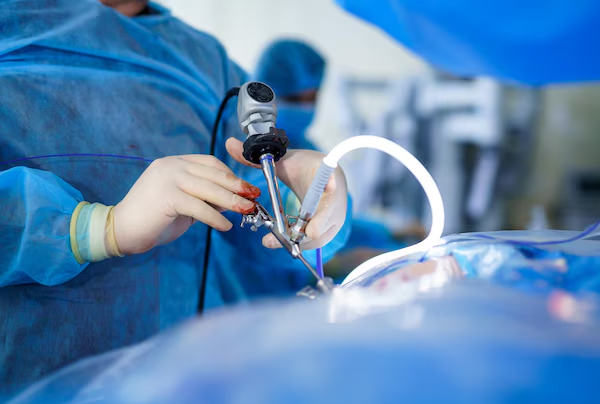
- A laparoscope and specialized instruments are inserted.
- The lower esophageal sphincter muscles are carefully divided.
- The passage between the esophagus and stomach is widened.
- Fundoplication may be performed to reduce acid reflux risk.
- Incisions are closed carefully after inspection.
The surgery usually takes around 1–2 hours depending on complexity.
Recovery After Laparoscopic Surgery
Hospital Stay
Most patients stay in the hospital for 1–3 days after surgery.
Postoperative Diet
Recovery includes gradual dietary progression:
- Clear liquids
- Soft foods
- Semi-solid foods
- Regular healthy diet gradually
Physical Recovery
Patients are encouraged to:
- Walk early after surgery
- Perform breathing exercises
- Avoid heavy lifting temporarily
Follow-Up Care
Regular follow-up appointments help monitor:
- Swallowing improvement
- Digestive comfort
- Nutritional status
- Acid reflux symptoms if present
Risks and Safety Measures
Like all surgeries, laparoscopic surgery for Achalasia Cardia may involve certain risks such as:
- Infection
- Bleeding
- Acid reflux
- Esophageal perforation
- Difficulty swallowing temporarily
- Recurrence of symptoms in rare cases
However, expert laparoscopic surgical care significantly improves safety and long-term success.
Lifestyle and Dietary Changes After Surgery
Patients are usually advised to:
- Eat slowly and chew food properly
- Consume smaller frequent meals
- Stay hydrated
- Avoid overeating
- Avoid lying down immediately after meals
- Maintain regular follow-up visits
Healthy eating habits support better long-term digestive outcomes.
Why Choose Dr. Sanjay Verma in Vasant Kunj?
Expertise in Advanced GI and Laparoscopic Surgery
Dr. Sanjay Verma specializes in minimally invasive gastrointestinal and esophageal surgeries.
Advanced Surgical Technology
Modern laparoscopic techniques ensure precision, safety, and quicker recovery.
Personalized Treatment Planning
Every patient receives individualized diagnosis, treatment, and postoperative care.
Comprehensive Esophageal Disorder Management
Complete care is provided from diagnosis to long-term follow-up.
Patient-Focused Care
Special attention is given to patient comfort, safety, and successful outcomes.
Trusted GI Surgeon in Vasant Kunj
Patients trust Dr. Sanjay Verma for compassionate and advanced treatment of complex gastrointestinal disorders.
Frequently Asked Questions (FAQs)
1. What is Achalasia Cardia?
Achalasia Cardia is a disorder in which the lower esophageal sphincter fails to relax properly, causing difficulty in swallowing food and liquids.
2. What is Laparoscopic Heller’s Myotomy?
It is a minimally invasive surgery performed to divide the tight muscles of the lower esophagus and improve swallowing.
3. Is laparoscopic surgery for Achalasia Cardia safe?
Yes, when performed by an experienced surgeon like Dr. Sanjay Verma, the procedure is considered safe and highly effective.
4. How long does recovery take after surgery?
Most patients recover within a few weeks and gradually return to normal eating and daily activities.
5. Can Achalasia Cardia be permanently cured?
While the condition itself may not be completely cured, laparoscopic surgery provides long-term symptom relief and significantly improves quality of life.