Partial Thyroidectomy
Partial Thyroidectomy
The thyroid gland is a vital endocrine organ responsible for regulating metabolism, energy levels, heart function, and body temperature. While many thyroid disorders can be managed with medication, some conditions require surgical treatment. A Partial Thyroidectomy in Vasant Kunj is a commonly performed procedure that removes only the affected portion of the thyroid gland while preserving as much healthy thyroid tissue as possible.
Dr. Sanjay Verma provides advanced thyroid surgery with a patient-centered approach, ensuring precise diagnosis, safe surgical techniques, and comprehensive postoperative care. Every patient receives a personalized treatment plan based on the size, location, and nature of the thyroid condition.
If you have been diagnosed with a thyroid nodule, goiter, or another localized thyroid disorder, a partial thyroidectomy may be the most effective treatment to restore your health while maintaining normal thyroid function.
What is a Partial Thyroidectomy?
A partial thyroidectomy is a surgical procedure in which only the diseased part of the thyroid gland is removed. Unlike a total thyroidectomy, this surgery preserves the remaining healthy thyroid tissue, allowing many patients to continue producing adequate thyroid hormones naturally.
A Partial Thyroidectomy in Vasant Kunj is often recommended when the disease is confined to one section of the thyroid gland and complete removal is not necessary.
Who Needs a Partial Thyroidectomy?
Your surgeon may recommend this procedure for:
- Benign thyroid nodules
- Solitary thyroid nodules
- Large thyroid cysts
- Localized multinodular goiter
- Suspicious thyroid lesions
- Indeterminate FNAC results
- Toxic thyroid adenoma
- Early thyroid cancer limited to one area
- Thyroid enlargement causing pressure symptoms
The decision is based on imaging studies, biopsy reports, thyroid function tests, and overall clinical evaluation.
Symptoms That May Indicate the Need for Surgery
Patients may experience:
- Lump in the front of the neck
- Visible thyroid swelling
- Difficulty swallowing
- Difficulty breathing
- Neck discomfort
- Hoarseness
- Persistent throat pressure
- Enlarging thyroid nodule
- Cosmetic concerns due to neck swelling
If these symptoms continue or worsen, surgical consultation is recommended.
Diagnosis Before Surgery
Before performing Partial Thyroidectomy in Vasant Kunj, Dr. Sanjay Verma conducts a detailed evaluation, including:
- Comprehensive medical history
- Physical examination
- Thyroid function tests
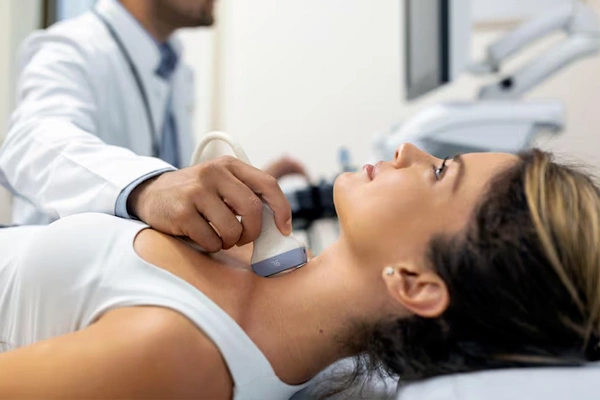
- Thyroid ultrasound
- Fine Needle Aspiration Cytology (FNAC)
- CT scan when required
- Blood investigations
- Vocal cord assessment in selected cases
These investigations help determine whether partial thyroidectomy is the most suitable treatment option.
How is Partial Thyroidectomy Performed?
The procedure is performed under general anesthesia.
The surgical steps typically include:
- Administration of general anesthesia.
- A small incision is made in the lower neck.
- The affected portion of the thyroid gland is carefully exposed.
- Important structures such as the recurrent laryngeal nerve and parathyroid glands are preserved.
- Only the diseased thyroid tissue is removed.
- Bleeding is controlled.
- The incision is closed using cosmetic sutures.
The surgery generally takes one to two hours depending on the complexity of the condition.
Benefits of Partial Thyroidectomy
Choosing Partial Thyroidectomy in Vasant Kunj offers several advantages:
- Preserves healthy thyroid tissue
- Maintains natural thyroid hormone production in many patients
- Removes localized thyroid disease
- Relieves pressure symptoms
- Improves swallowing and breathing
- Smaller surgical intervention compared to complete thyroid removal
- Faster recovery
- Reduced need for lifelong thyroid medication in many cases
- Excellent cosmetic results
- Improved quality of life
Recovery After Surgery
Recovery is usually smooth with proper postoperative care.
Most patients:
- Stay in the hospital for one day
- Resume light activities within a few days
- Return to work within one to two weeks
- Experience minimal postoperative discomfort
- Notice gradual fading of the surgical scar
Regular follow-up visits help monitor thyroid hormone levels and ensure proper healing.
Possible Risks
Although partial thyroidectomy is considered a safe procedure, possible risks include:
- Bleeding
- Infection
- Temporary voice changes
- Rare nerve injury
- Scar formation
- Temporary calcium imbalance
- Need for additional surgery if required by pathology results
These complications are uncommon when surgery is performed by an experienced thyroid surgeon.
Why Choose Dr. Sanjay Verma?
For patients seeking Partial Thyroidectomy in Vasant Kunj, Dr. Sanjay Verma provides expert surgical care with attention to safety and long-term outcomes.
Reasons to choose Dr. Sanjay Verma include:
- Expertise in thyroid surgery
- Accurate diagnosis and treatment planning
- Advanced surgical techniques
- Preservation of healthy thyroid tissue whenever possible
- Focus on nerve and parathyroid gland preservation
- Cosmetic surgical closure
- Personalized patient care
- Comprehensive postoperative follow-up
- Transparent communication
- Commitment to excellent surgical outcomes
Each treatment plan is tailored according to the patient's specific thyroid condition and overall health.
Frequently Asked Questions (FAQs)
What is the difference between partial and total thyroidectomy?
Partial thyroidectomy removes only the affected portion of the thyroid gland, while total thyroidectomy removes the entire gland.
Will I need thyroid medication after surgery?
Many patients retain normal thyroid function after partial thyroidectomy, although some may require thyroid hormone replacement depending on the remaining gland function.
Is partial thyroidectomy safe?
Yes. It is a safe and commonly performed procedure when carried out by an experienced thyroid surgeon.
How long does recovery take?
Most patients return to normal daily activities within one to two weeks.
Will there be a scar?
A small incision is made in the lower neck, and the scar typically becomes less noticeable over time.
Is surgery necessary for every thyroid nodule?
No. Surgery is recommended only when the nodule is suspicious, symptomatic, growing, or causing functional or cosmetic concerns.
Conclusion
A Partial Thyroidectomy in Vasant Kunj is an effective treatment for selected thyroid disorders while preserving healthy thyroid function whenever possible. Timely diagnosis and expert surgical care can relieve symptoms, prevent complications, and improve long-term health.
With extensive experience in thyroid surgery, Dr. Sanjay Verma offers personalized treatment, advanced surgical techniques, and comprehensive postoperative care to ensure the best possible outcomes for every patient.